
Capacity you cannot use
Uncovered shifts and postponed studies limit what an otherwise ready laboratory can deliver.
For hospitals and sleep laboratories nationwide
Build your sleep technologist workforce through foundation education, local experience, and continued support.
Give promising candidates a structured path into sleep technology, supported by practical foundations, local preceptors, and a full year of coaching through Accelerator PLUS.

The business problem
When demand is there but staffing is not, rooms and equipment cannot translate into completed studies. Recruiting is one part of the answer. Developing your own people can become another.
Dream Sleep Center works with hospitals and sleep laboratories across the United States to put a structured educational pathway around that investment, while strengthening the local team that teaches the next hire.
Uncovered shifts and postponed studies limit what an otherwise ready laboratory can deliver.
Every training commitment needs protected time from the people already responsible for the service.
A repeatable development process can help prepare your organization for future hiring needs.
Which part of your laboratory’s capacity could you restore with the right person?
Put numbers to the opportunityThe employer pathway
A candidate’s progress and your laboratory’s readiness move together. The pathway connects foundation education to supervised experience and continuing development.
You select and employ the candidate. Review learning habits, reliability, patient communication, and compatibility with overnight work. Identify the intended education route and name primary and backup preceptors.
The starting point: a candidate and a local team ready to learn.
Live education, observation or supervised practice, and educational assessment establish the starting point for continued development. Preparatory learning is identified separately from the 80 live hours.
A clear account of strengths, learning gaps, and next steps.
The employer’s home laboratory provides supervised on-the-job training (OJT). Milestones, competency records, and feedback make progress visible. Your clinical leadership continues to authorize assignments.
Six months is a development target, not a guarantee of readiness.
Active coaching, monthly education, progress reviews, registry preparation, and included community access support the trainee and local preceptors through the full purchased year.
Early registry success does not end the coaching term.
Accelerator PLUS
The six-month development target is one point in a longer support relationship. PLUS continues through the full 12-month term for individual and employer partnership seats.
Active coaching and community access run throughout the included year. Milestones guide review; demonstrated readiness guides advancement.
Case-based learning and practical topics that connect knowledge to work in the laboratory.
Regular conversations about progress, learning barriers, logs, and the next actions.
An educational preparation plan and readiness feedback tied to the candidate’s pathway.
Included access for continued learning and educational discussion with peers and preceptors.
The written offer defines the service schedule, covered participants, and support dates. Continuing membership after the included term is a separate purchase.
Preceptor development
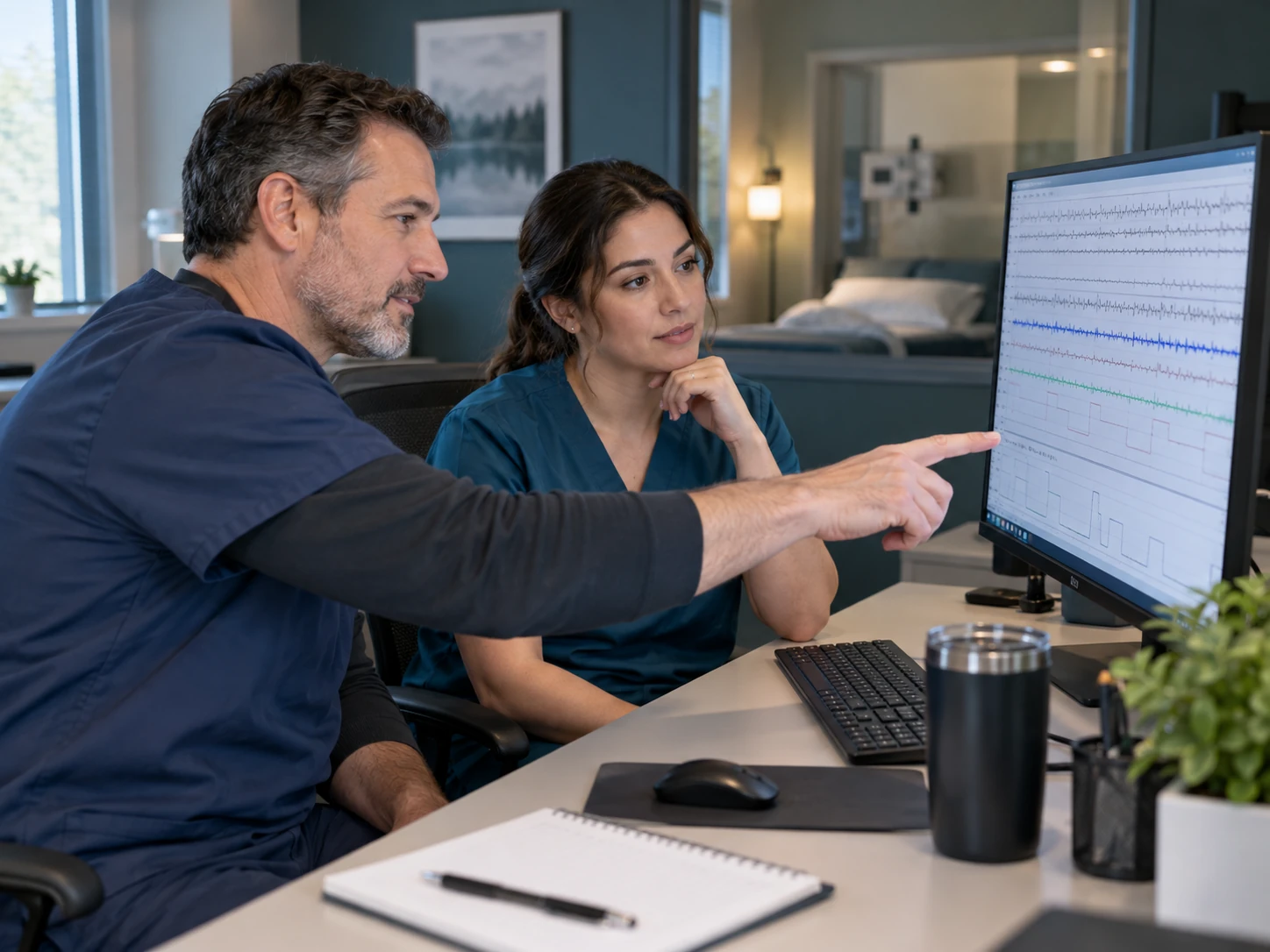
A strong technologist also needs time and a workable process to develop someone else. We help local preceptors organize teaching, give specific feedback, document progress, and respond to learning gaps.
Built from operating experience
This pathway grows out of Dr. Bradley W. Smith’s experience as a sleep medicine physician and owner of Dream Sleep Center in Colorado.
Recruiting challenges and early training attempts made the need for structured teaching, preceptor development, culture, and continued contact clear. Those lessons shape the program we bring to employers.
Progress you can discuss
Course attendance, clinical competence, eligibility, and examination performance answer different questions. Track them separately, alongside the operational outcomes that matter to your laboratory.
Assessments, competency reviews, and specific learning gaps.
Pathway requirements, exam readiness, and recorded results.
Additional studies, preceptor time, staffing stability, and retention.
Your capacity. Your numbers.
Explore an illustrative annual operating model. Use truly additional studies, realistic collections, and the full payroll required to deliver them. Nothing you enter is sent to us.
Use your full employer investment, including your privately quoted program fee.
Illustration, not a forecast or clinical staffing recommendation. Assumes incremental demand and steady output after training. For overnight studies using one bed per study, completed studies also represent occupied bed-nights. Recovery uses contribution, not gross revenue, and excludes collection delays, financing, tax, attrition, and replacement hires. The workbook for your proposal can model those details.
The right level of support
Choose the support your preceptors and candidates need. We provide pricing privately after discussing scope, readiness, and the number of people you can develop.
For an employer with strong internal development and registry-preparation resources.
For an employer that wants a structured transition into its own local development program.
For an employer that wants continuing support for both the trainee and the local preceptors.
Developing more than one person?
Preferred includes two PLUS positions. Growth includes four. Enterprise starts with six, with facilities and coordination defined in the proposal. Dedicated cohorts are scoped individually.
Employment, local supervision, travel, exam fees, and required external licenses must be addressed in the written proposal. A private cohort does not automatically include PLUS support.
A fair comparison
You may be able to. The useful question is what your local team would need to commit.
Price the curriculum, materials, applicable recognition work, protected teaching time, and clinical activity displaced. Include the cost of another attempt if the first does not produce a productive team member.
An internal program can cost less, particularly when development is reused across hires. DSC’s value must be assessed against your capacity, available staff time, and the support your team needs.
Our planning example uses 160 combined development hours, split 80/80 between the director and lead. That is an editable estimate. We do not claim an observed internal failure rate or guarantee a DSC outcome advantage.
For your next leadership conversation
Share the pathway, check local readiness, and begin a business case with your clinical and operational team. Download directly. No signup required.
Read the public employer resource overview
The capacity problem, the pathway, PLUS support, and employer responsibilities.
A working checklist for candidate fit, preceptors, experience, and launch planning.
Capture local inputs and compare the full investment in each approach.
Common employer questions
Have a question about your facility or a candidate’s situation?
Email our training teamHospitals and sleep laboratories that want to develop candidates and can provide appropriate local supervision and clinical experience. Readiness depends on both the person and the employer’s teaching capacity.
No. The full year of active coaching and included community access belongs to Accelerator PLUS and PLUS seats within employer partnerships. Foundations and Accelerator have narrower scopes.
Six months is a planning target and review point. Progress depends on demonstrated competence, experience, and applicable requirements. The employer’s clinical leadership authorizes assignments. Attendance alone does not establish readiness.
The employer selects and employs the candidate, names primary and backup preceptors, protects teaching time, provides suitable supervised shifts, verifies local records, and retains clinical governance and patient-care responsibility.
Dream Sleep Center is listed by the Board of Registered Polysomnographic Technologists as Focused STAR provider F020. Verify the current BRPT listing. STAR designation applies to the education program; candidate eligibility and certification requirements are separate. Confirm the applicable route before enrollment.
No. Candidate-specific eligibility must be verified for the applicable pathway. PLUS includes registry preparation and educational readiness feedback. Eligibility, clinical competence, and examination performance remain separate milestones.
Employers across the United States can participate. The current delivery plan uses two five-day weeks in Pueblo and Colorado Springs, Colorado; supervised OJT takes place at the employer’s home laboratory. Cohort dates, the final timetable, preparatory work, travel arrangements, and any custom delivery must be confirmed in your proposal.
An early pass does not end the included PLUS term. The remaining coaching can support practice development and future preceptor capability. Continued membership beyond the included 12 months is separately scoped.
Email our team to discuss your staffing need, candidate count, local preceptors, and desired start. We will define the appropriate package and provide private pricing. The proposal should identify travel, exam fees, external licenses, local employment costs, and other exclusions.
No. They are arithmetic illustrations based on editable assumptions. Real results depend on demand, completion rates, payroll, study costs, supervision, training progress, and collection timing. Your employer proposal should use facility-specific inputs.
Start with the capacity you want to restore
Tell us about your organization and what you want to accomplish. We’ll help you explore the right pathway for your trainees, preceptors, and laboratory.
Request program information or a phone or Zoom conversation. Pricing is discussed privately, based on your program and organization.
training@dreamsleepcenter.orgLooking for a career at Dream Sleep Center?
Start a recruiting conversation.